
Fruitarian Diet

A Fruitarian diet consists mainly of raw fruit – over 75% – with the remainder of the diet composed of raw, vegan foods. Some Fruitarians eat only what falls naturally from a tree or is available without harvesting or killing any part of the plant. All cooked foods are avoided, as it’s believed that cooking kills a food’s natural, beneficial enzymes.

Fruitarians characterize fruit as the ideal natural food. Some individuals may adopt this diet for religious, ethical, or moral reasons, or in an attempt to align themselves with the simplicity of nature.

Foods to include:

  • Raw vegetables

  • Raw fruits

  • Nuts and seeds

  • Healthy oils

Foods to avoid:

  • Cooked vegetables

  • Cooked fruit

  • Grains

  • Meat

  • Poultry

  • Fish

  • Eggs

  • Beans

  • Dairy

  • Sugar

  • Trans fats

  • Processed foods

Pros:

  • Fruit has cleansing effect and may heighten senses

  • May reduce amount of pure water needed since fruit has natural high water volume

  • Fruit contains vitamins, minerals, and phytochemicals essential to optimal health

Cons:

  • Very restrictive

  • Lacks variety – may lead to frequent hunger and nutrient imbalances

  • Difficult to sustain

  • Fruit may be genetically engineered and/or contaminated with pesticides or other chemicals

  • High in sugar

Sources: 

Fruitarian Worldwide Network www.fruitnet.org 
The Fruitarian www.thefruitarian.com 
How to Become a Fruitarian www.thenewearth.org 

GAPS Diet

The GAPS Diet, an extension of Natasha Campbell-McBride’s Specific Carbohydrate Diet, is a comprehensive nutritional program for people who suffer from Gut and Psychology Syndrome or mental disabilities due to improper gut function. Campbell-McBride, a neurologist and nutritionist, created the GAPS diet in response to her findings that many brain-related conditions, such as autism, ADD/ADHD, dyspraxia, dyslexia, and schizophrenia, might be treated by healing the gut.

In addition to a specific way of eating, Campbell-McBride recommends probiotics, essential fatty acids, digestive enzymes, vitamin A, and other vitamin and mineral supplements to alleviate GAPS symptoms. Detoxification makes up the third part of this plan: In order to heal the gut, it’s necessary to cleanse the body of the toxins that have accumulated over time – juicing and other methods of purifying the body are suggested. Depending on the severity of GAPS, patients may need to follow the diet for two or more years.

Most patients enter the six-part introduction diet before moving onto the full GAPS diet. This serves as an initiation to the healing process and is recommended for all patients, especially those with severe digestive symptoms or food allergies. During the introduction diet, specific guidelines are given in terms of which foods may be consumed. Broth, quality fats, easy-to-digest vegetables, fermented vegetables, and boiled meats are most common. Once a patient begins to experience relief from digestive symptoms, other foods (such as raw vegetables, juices, nuts, fruit, and nut flours) can be slowly added to the diet.

Once a patient reaches the full GAPS diet, more variety may be consumed, though the guidelines are patient-specific. All phases exclude grains, starchy vegetables, sugars, dairy, legumes, and processed foods.

Foods to include:

  • Non-starchy vegetables

  • Fruits

  • Meat

  • Poultry

  • Fish

  • Eggs

  • Beans

  • Some dairy

  • Nuts and seeds

  • Healthy oils

Foods to avoid: 

  • Grains

  • Most dairy

  • Sugar

  • Agave

  • Sugar replacements

  • Baking powder

  • Yeast

  • Beer

  • Potatoes

  • Chocolate

  • Instant coffee

  • Processed foods

  • Trans fats

Pros:

  • Emphasizes whole foods

  • May heal lifetime ailments

  • Can be a lifestyle rather than a diet

Cons:

  • Very restrictive

  • Some may be opposed to eating meat

  • May be difficult to plan meals

Sources:

Simplified GAPS Outline www.gapsdiet.com 
What is the GAPS diet www.nourishedkitchen.com 

GenoType Diet

The GenoType Diet was created by Peter D'Adamo, ND, who also created the Blood Type Diet. Dr. D'Adamo's research suggests that an individual’s genes are not refractory – they may be altered depending on environmental factors and are continually changing. His findings suggest that a person can “reprogram” their gene responses to lose weight, prevent disease, repair cells, and age gracefully. The GenoType Diet categorizes people into six categories: Hunter, Gatherer, Teacher, Explorer, Warrior, and Nomad. In addition to environmental factors, dietary choices also influence genes.


The following list explains each type:

GenoType 1: The Hunter

GenoType 1is characterized as tall, thin, and intense with an overabundance of adrenaline and a fierce, nervous energy that winds down with age. The Hunter was originally the success story of the human species. Vulnerable to systematic burnout when overstressed, the Hunter's modern challenge is to conserve energy for the long haul. The Hunter is said to almost always be blood type O, and it’s recommended they follow Dr. D’Adamo’s blood type O recommendations.

GenoType 2: The Gatherer
GenoType 2 is full-figured, even when not overweight. The Gatherer struggles with body image in a culture where “thin is in." An unsuccessful crash dieter with a host of metabolic challenges, the Gatherer becomes a glowing example of health when properly nourished. The Gatherer is thought to usually be blood type O and sometimes type B. Gatherers should follow the respective approach for their type that Dr. D’Adamo outlines.

GenoType 3: The Teacher
GenoType 3 is strong, sinewy, and stable, with great chemical synchronicity and stamina. The Teacher is built for longevity when given the right diet and lifestyle. This is the GenoType of balance, blessed with a tremendous capacity for growth and fulfillment. Dr. D’Adamo believes the Teacher to almost always be blood type A and sometimes type AB.

GenoType 4: The Explorer
GenoType 4 is muscular and adventurous. The Explorer is a biological problem solver with an impressive ability to adapt to environmental changes and an above average capacity for gene repair. The Explorer's vulnerability to hormonal imbalances and chemical sensitivities can be overcome with a balanced diet and lifestyle. Explorers are unique in that they might be A, B, AB, or O. They are often Rh negative and non-secretors. Rh is a type of protein on the surface of red blood cells that Explorers lack. Non-secretors do not secrete the antigen characteristics of their blood type in bodily fluids and tend to have more digestive problems.

GenoType 5: The Warrior
Usually blood type A or AB, GenoType 5, is long, lean, and healthy in youth. The Warrior is subject to bodily rebellion in midlife. With an optimal diet and lifestyle, the Warrior is able to overcome the quick-aging metabolic genes and experience a second "silver" age of health.

GenoType 6: The Nomad
GenoType 6 has a great sensitivity to environmental conditions and especially changes in altitude and atmospheric pressure. Although the Nomad is vulnerable to neuromuscular and immune problems, when well-conditioned this type can easily control caloric intake and age gracefully. The Nomad is most often blood type B and sometimes AB.

Family history, blood type, and physical attributes such as fingerprints and jaw angles are used to determine an individual’s GenoType. Each GenoType has a specific way of eating to optimize the body's ability to function. Not only is exercise encouraged, certain types of exercise are outlined for specific GenoTypes.

Foods to include, universally:

  • Green vegetables

  • Fish

Foods to avoid, universally:

  • Processed food

  • Cured meats

Pros:

  • May improve digestion and absorption of nutrients

  • May lead to weight loss

  • Honors bio-individuality

  • Minimizes processed foods

Cons:

  • Supporting scientific evidence is limited

  • Blood type protocols may not be accurate for everyone

  • Diet requirements may become expensive

Sources:

Change Your Genetic Destiny www.genotypediet.com 
GenoType Diet Information www.bloodtypedietboom.com 

Gluten-free Diet

Gluten is a protein found in wheat, rye, barley, and derivatives of these grains. A gluten-free diet is traditionally used to treat individuals that suffer from Celiac disease, an autoimmune disorder of the small intestine that is triggered by an individual’s intolerance or hypersensitivity to gluten.

Celiac disease can manifest in a variety of symptoms, from gastrointestinal to neurological, and if left untreated, may develop into other autoimmune diseases including thyroid disease or even cancer. In some cases, individuals may not experience any signs or symptoms after consuming gluten, even as damage to the small intestines may be occurring.

Common symptoms of Celiac include abdominal bloating, gas, diarrhea, pale stools, weight loss, stomach pain, skin rashes, anemia, chronic fatigue, brain fog, seizures, tingling sensations, ulcers, amenorrhea, and muscle, joint, bone cramps, and pains.

It’s important to note that one does not have to have full-blown Celiac disease to experience these symptoms. Many people are varying levels of gluten-intolerant, and although they do not test positive for Celiac, may experience a great improvement in health by eliminating it from their diet.

While following a gluten-free diet, it’s very important to be cautious of cross-contamination. This can happen during the manufacturing process or at home if proper care is not taken during preparation. A common example of this is oats. Oats are inherently gluten-free, however, they are often contaminated with wheat during the growing and processing stages. It’s always best to read labels and contact the manufacturer if there is any doubt. Your level of intolerance will dictate how scrupulous you need to be when it comes to cross-contamination.

Those following a gluten-free diet are encouraged to eat lots of fresh fruit and vegetables, high-quality meat and fish, healthy fats, and gluten-free grains. Due to the fact that many grains are enriched with vitamins and minerals, following a gluten-free diet may lead to certain deficiencies if dieters do not actively incorporate these nutrients in other forms. Processed and packaged gluten-free foods often contain yeast and preservatives that can be very hard on the system, and therefore, are not recommended.

Foods to include:

  • Vegetables

  • Fruits

  • Gluten-free grains

  • Meat

  • Poultry

  • Fish

  • Eggs

  • Beans

  • Dairy

  • Nuts and seeds

  • Healthy oils

Foods to avoid:

  • Barley

  • Rye

  • Wheat

  • Spelt

  • Durum flour

  • Kamut

  • Semolina

  • Spelt

  • Bulgur

  • Farina

  • Graham flour

  • Malt

  • Brewer’s yeast

  • Processed foods

Pros:

  • Drug-free cure for those with celiac

  • Emphasizes whole foods

  • Gluten is the only major restriction

Cons:

  • Some followers may fall into processed foods trap

  • May be difficult for some to avoid gluten

  • May attract fad dieters who do not need to go gluten-free

Sources:

The Gluten-Free Diet www.celiaccentral.org 
Gluten-Free Diet  www.celiac.org
Gluten-Free Diet www.mayoclinic.com 

Glycemic Index Diet

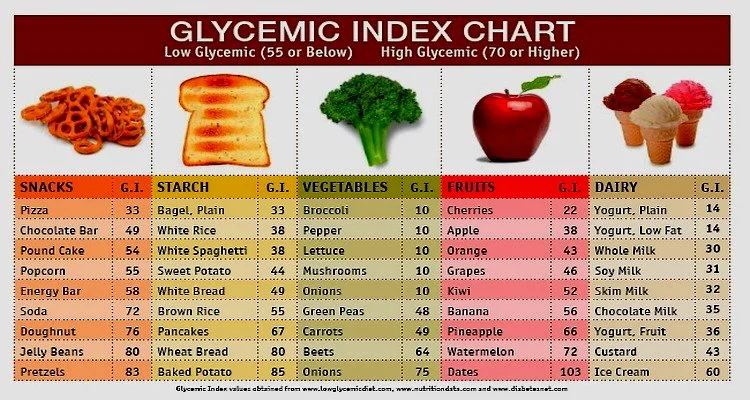
The Glycemic Index (GI) Diet measures foods on a scale of 0-100 based on the degree to which they increase blood sugar levels in the body. Based on this rating, each food is classified as a low-, medium-, or high-GI food.

This diet argues that all foods are not created equal nor should they be treated as such. Low-GI foods are foods with a GI rating less than or equal to 55, medium-GI foods are foods rated 56-69, and high-GI foods are equal to or greater than 70 on the GI scale. The lower the GI level of the food, the slower the food is digested and absorbed. The higher the GI level, the faster the food is digested and absorbed.

Common low-GI foods include beef, chicken, lamb, scallops, winter squash, garlic, carrots, asparagus, avocados, beans, nuts, broccoli, cabbage, fennel, kale, and olive oil. Medium-GI examples are millet, watermelon, beets, sweet potatoes, corn, and leeks. High-GI foods are usually high in starch, such as potatoes, white bread, and white pasta.

The goal of this diet is to control blood sugar levels by controlling the rate of digestion – lower-GI foods digest more slowly providing a steady stream of energy rather than a spike in energy followed by a crash. Low-GI foods have less of an effect on blood sugar and insulin levels, which will lead to a longer feeling of fullness and reduced cravings as well as an increase in energy and stabilized moods. This is said to help reduce the possibility of overeating and stabilize mood.

One convenient aspect of the GI diet is the concept of food swapping: Switching out one high-GI food for a lower-GI food to make the same meal. An example of this would be using multi-grain bread (with a GI of 48) instead of white bread (with a GI of 71). Adding certain foods (such as legumes) to meals is believed to slow the rate of digestion and absorption.

Foods to include:

  • Vegetables

  • Fruits

  • Whole grains

  • Meat

  • Poultry

  • Fish

  • Eggs

  • Beans

  • Dairy

  • Nuts and seeds

  • Healthy oils

Foods to avoid:

  • Refined grains

  • Sugar

  • Trans fats

  • Processed foods

Pros:

  • No calorie counting

  • Relatively easy to follow

  • Reduced risk of heart disease

  • Improved control over diabetes

Cons:

  • Some math and knowledge of GI ratings required

  • Selecting appropriate meals may be difficult and inefficient, especially when dining out

  • May be difficult for some to avoid processed foods

Sources: 

About Glycemic Index www.glycemicindex.com 
The Glycemic Index Diet (Low Glycemic Diet)  (Links to an external site.)