
The Low FODMAP Diet was created for people with trouble digesting certain short-chain carbohydrates.
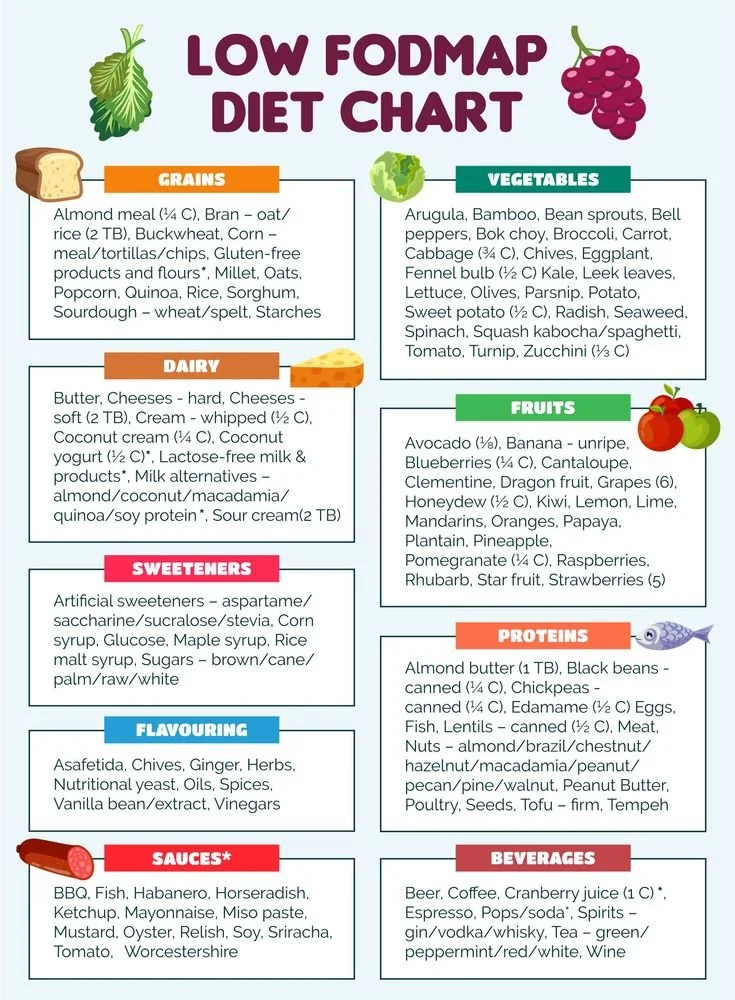
FODMAPs stands for Fermentable Oligosaccharides, Disaccharides, Monosaccharides, and Polyols. All of these terms represent different types of sugars and starches or short-chain carbohydrates. Foods like wheat, dairy, ice cream, beans, and even apples are high in these sugars and starches, and many people have trouble digesting them. Common side effects include gas, constipation, and bloating. Therefore, these people are advised to go on a low FODMAPs diet. Essentially, The Low FODMAP Diet limits lactose, fructose, fructans, galactans, and polyols. It is often used to treat IBS and similar conditions.
Foods to include:
Most vegetables
Some fruits
Gluten-free grains
Meat
Poultry
Fish
Eggs
Lactose-free dairy
Nuts and seeds
Healthy oils
Foods to avoid:
Artichokes, cauliflower, mushrooms, sugar snap peas
Apples, apricots, blackberries, boysenberries, dates, figs, guava, mangoes, nectarines, papaya, peaches, pears, plums, persimmons, prunes, watermelon
Dried and canned fruit
Gluten-containing grains
Beans
Lactose-containing dairy
Trans fats
Saturated fats
Sugar
Refined grains
Processed foods
Pros:
Can be a lifestyle rather than a diet
May alleviate IBS
May lead to weight loss
May lead to increased energy
Cons:
Not a quick fix – takes time and dedication
May be too specific to follow long-term
Difficult to eat in restaurants or social situations
Sources:
The Low FODMAP Diet www.stanfordhealthcare.org