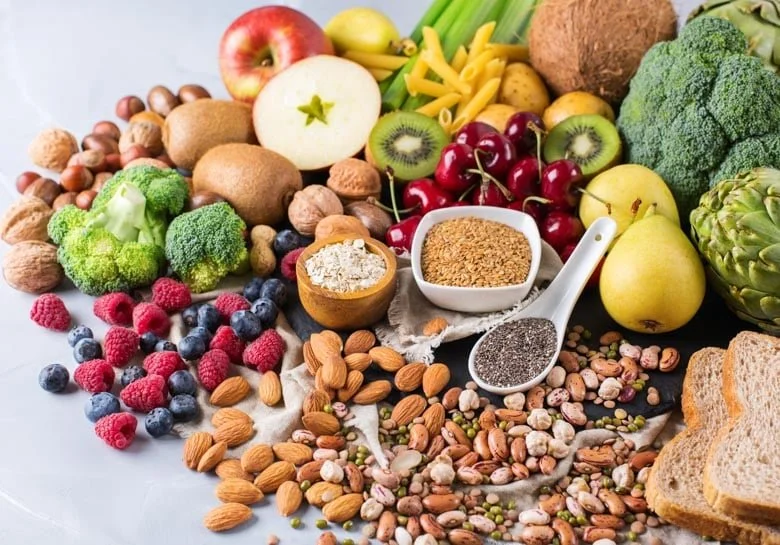
A Vegetarian diet is a plant-based approach that excludes meat, poultry, and fish. Most vegetarians consume dairy products, and many eat eggs. Those vegetarians who consume both eggs and dairy are referred to as lacto-ovo vegetarians, while those who consume only dairy are lacto-vegetarians. When properly implemented, a vegetarian diet is rich in fruits, vegetables, nuts, seeds, legumes, and whole grains.
The reasons for choosing a vegetarian diet may be related to one or more of the following: morality, religion, culture, ethics, aesthetics, environment, society, economy, politics, taste, and/or health. Many vegetarians are inspired by one of these reasons, and evolve to identify with many or all of them.
Choosing to follow a vegetarian diet may greatly improve one’s health, and properly planned vegetarian diets have been found to satisfy all nutritional needs. Nutritionists recommend including a wide variety of colorful fruits and vegetables in every diet to reap the most health benefits. A nutrient-dense diet boasts lots of fiber and vitamins, as well as cancer-fighting micronutrients like antioxidants. A balanced vegetarian diet is often naturally low in fat and cholesterol, which decreases the risk of heart disease and diabetes. This approach has also been proven to aid in combating obesity and obesity-related diseases.
Foods to include:
Vegetables
Fruits
Grains
Dairy (optional)
Eggs (optional)
Beans
Nuts and seeds
Oils
Foods to avoid:
Meat
Poultry
Fish
Pros:
May reduce hypertension
May initiate weight loss
May improve energy levels
Cons:
May cause excessive weight loss
May lead to anemia and other nutritional deficiencies
May lead to excessive dairy consumption and intolerance
Sources:
The Vegetarian Resource Group www.vrg.org