
The Superfoods Diet essentially refers to a style of eating that emphasizes consuming foods based on their nutritional value – the foods offering the most nutrients or beneficial compounds per serving are favored.
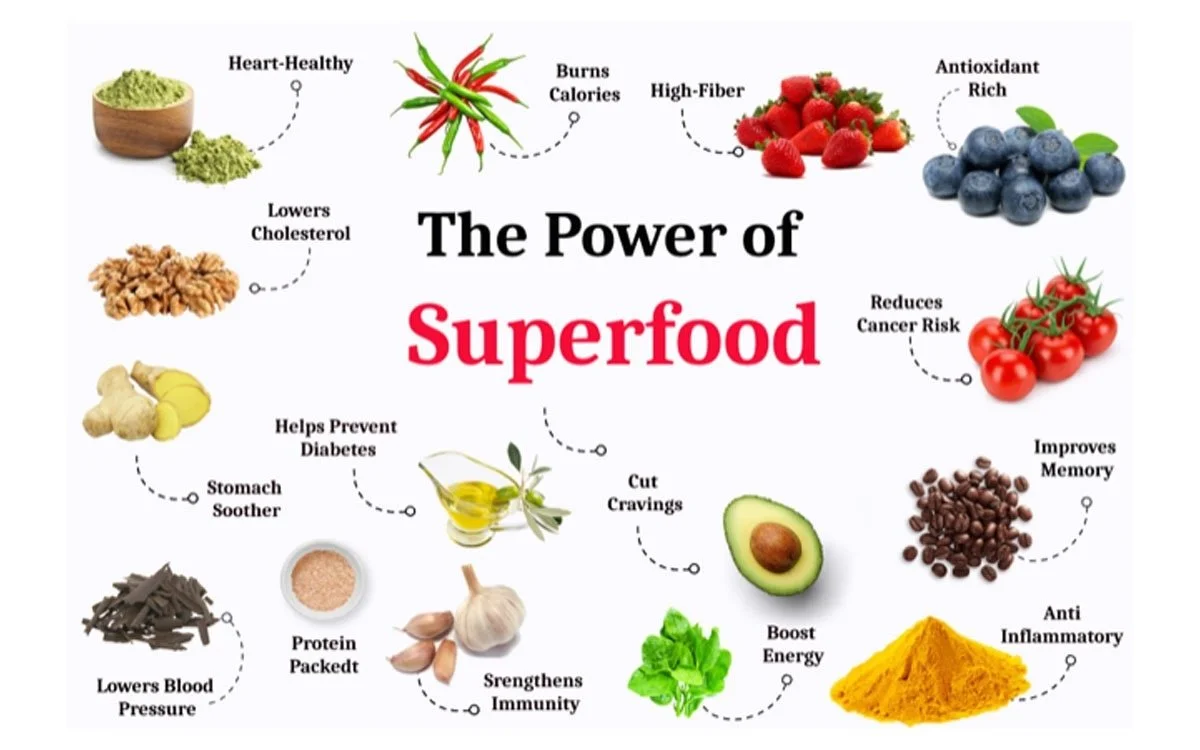
Superfoods are often rich in antioxidants, vitamins, minerals, phytonutrients, enzymes, and fiber. These foods help support the immune system and reduce oxidative stress in the body that can lead to early aging and, eventually, disease. Many people feel that foods have to be exotic to be considered a superfood, but others feel that all whole foods are “super” foods.
Foods to include:
Berries (acai, blueberries, blackberries, tart cherries, raspberries, goji, lingonberries)
Leafy greens (collard greens, kale, bok choy, mustard greens, chard)
Beans/legumes (lentils, black beans, peas)
Whole grains (oats, quinoa, brown rice, forbidden rice)
Mushrooms (chaga, reishi, shiitake)
Seeds (chia, hemp, flax, pumpkin)
Probiotic-rich foods (pickles, tempeh, kombucha, kefir)
Pasture-raised eggs
Pomegranates
Avocados
Ginseng
Spirulina and blue-green algae
Wheatgrass
Maca
Turmeric
Green tea
Cacao
Juices/smoothies
Organic foods (no pesticides)
Foods to avoid:
Refined foods (sugar, grains, etc.)
Most animal foods
Artificial colors, sweeteners, and preservatives
GMOs
Pros:
Relies mostly on whole foods
High in antioxidants
May help to support longevity
Cons:
May be more costly
May require more prep time
Some superfoods may interact with certain medications – if you are on medication, consult your physician first to make sure there isn’t a risk of a food-drug interaction.
Source:
Wolfe, D. (2009). Superfoods. Berkeley, CA: North Atlantic Books.