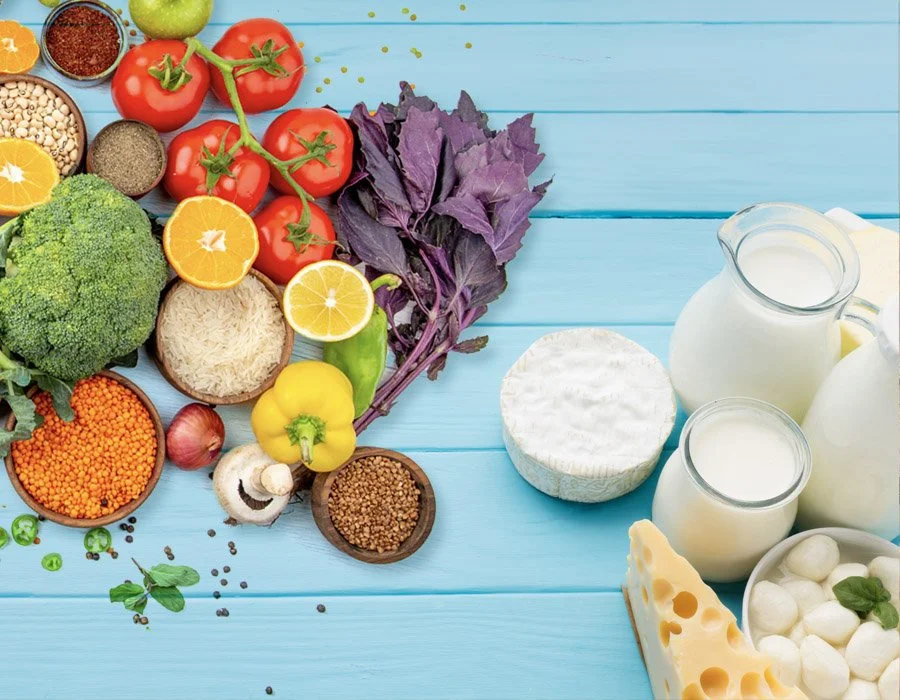
A vegetarian is defined as an individual who does not consume meat. However, some vegetarians may choose to consume dairy products, such as milk and cheese, and call themselves “lacto-vegetarians.” A lacto-vegetarian does not eat meat, fish, poultry, or eggs, but includes dairy products such as milk, cheese, yogurt, butter, and cream. The prefix "lacto" comes from the Latin word for milk.
Those who wish to lower their cholesterol levels, and believe that removing meat and egg yolks will help them achieve this, may adopt this diet. Others protest cruelty in the meat industry and choose not to eat eggs. Lacto-vegetarian diets are popular among followers of Eastern religions such as Hinduism, Jainism, Buddhism, and Sikhism. These religious traditions encourage lacto-vegetarian diets because dairy products come from animal output rather than from taking an animal’s life (when animals are killed for sustenance).
Foods to include:
Fruits
Vegetables
Grains
Pasta
Dairy
Beans
Nuts
Seeds
Foods to avoid:
Meat
Fish
Eggs
Pros:
Generally a whole foods approach
May reduce cholesterol levels in some
May lead to weight loss
Honors bio-individuality to some extent
Honors primary food
Cons:
Some may not do well with dairy
Some may thrive on meat
Approach may be too broad for some, leading to unhealthy choices and processed food, as long as they are “lacto-vegetarian”
Sources:
Vegetarian Types www.vegetarian-restaurants.net
Frequently Asked Questions – Definitions www.ivu.org
What is a Lacto Vegetarian Diet? www.vegetariannook.com