
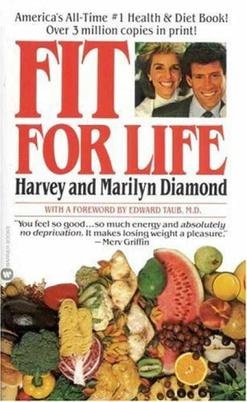
Harvey and Marilyn Diamond co-authored the book Fit for Life, which was published in 1985. This diet is a mostly vegan approach, and condemns food combining – a method originally developed by William Howard Hay, MD, in the 1920s – as a diet deterrent.
The Diamonds suggest 70% of the diet include high-water content foods such as fruits and vegetables to “wash the toxic waste” from the body rather than “clog” it. According to Fit for Life principles, foods that are highly-refined or highly-processed are considered “dead foods” while raw fruits and vegetables are considered “living.”
The diet includes eating only fruit in the morning and avoiding animal protein. The plan also advises against mixing proteins and starches, which stresses the digestive system, interferes with the body’s ability to absorb valuable nutrients and enzymes, and promotes fat storage.
They also discourage water with meals since they believe it dilutes digestive acids in the stomach. Dairy products are seen as allergenic and should be avoided on this plan. This approach includes nutritional supplements, which the Diamonds strongly recommend to make up for “enzyme deficient foods.”
Fit for Life is presented as a long-term plan for health rather than a crash diet.
Foods to include:
Low-starch vegetables
Low-starch fruits
Whole grains
Beans
Nuts and seeds
Healthy oils
Foods to avoid:
High-starch vegetables
High-starch fruits
Refined grains
Meat
Poultry
Fish
Eggs
Dairy
Processed foods
Sugar
Trans fats
Pros:
Does not require calorie counting or portion control
Emphasizes whole foods
May improve heart health
Cons:
Claims not supported by scientific research
Dieters encouraged to purchase supplements
Program can be costly
Sources:
The Fit For Life Weight Management System www.fitforlife.com
Harvey Diamond and Marilyn Diamond’s Fit for Life